
UX is Multivariate
Here’s the proof of why UX goes above & beyond a single element like say, the solution…

Even if you have had some minor experience in product management or aspiring to be a product manager you might have obviously heard of that classic debate:
“Is product management art or science⁉️ “
Across the length & breadth of your experience I’m sure you have heard of opinions & perceptions that tend to bracket skills defaulting them as more suited to a profession / a given position in the organizational hierarchy. Like for instance:
You seem to have a flair for people’s perceptions – psychology as a subject & marketing as a profession may work like a charm for you
You can keep your nerves calm & are good at influencing, getting the best out of people – you will surely make a great manager someday
Stripping off electronic devices to the components & plugging them back in flawlessly to get them to work just as is – Wow, that’s an engineer in the making there
Wow, those are some amazing sketches I see there – you should take up arts as a subject & perhaps graphic designing as a profession
Not to forget the most cliched of them all, something that most of us may have heard right from our childhood:
Oh, you’re good in MATH – so you ought to take up engineering
Are those opinions all wrong?
No, not entirely. But they could largely be cliched.
One possessing the flair of digesting tons of information pertaining to the opinions of people could lead to a certain degree of insight at the basic level. But whether that would make them impeccable at marketing is quite a debatable topic & also quite a one-sided opinion.
Being good in MATH is such an elementary skill that could really find a very widespread application & open up handsome avenues. Equating that directly to Engineering (although not altogether wrong) could feel like one is limiting their options there.
It’s all down to those perspectives as you might have taken notice. And, UX is really no different. The same things could apply there as well. When someone who is a designer could look at UX as an art it could really differ if that happens to be a product manager or a technical architect.
Let’s break this down further considering the case of Video games.
For someone playing video games in the early 90s, they are already excited & the drive could be innate given the lack of choice back then. So, building a basic UX with the focus entirely on the rules of the game might have worked well, like for instance: Packman.
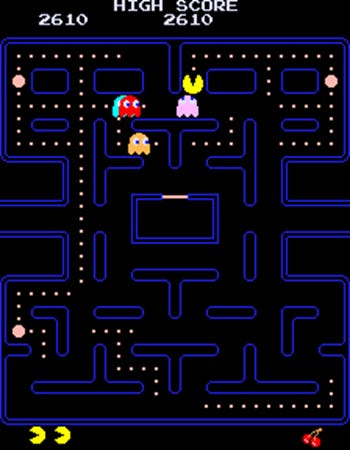
These were the first on the block, one of its kind pre-GUI games & they came at an era when the gaming scene was literally inexistent. The focus of the user was more on the outcome as they wanted to do anything & everything possible to finish those games gunning for a high scores & go on breaking those records for fun.
But the post Road Rash & NFS era beginning from the mid-90s which focused on improved graphics & a better playing experience towards revolutionizing the gaming scene in a great way almost shaping the current era of games. Am sure every gamer out there is thanking their heavens for this drift happened back then (provided they are aware of the evolution).
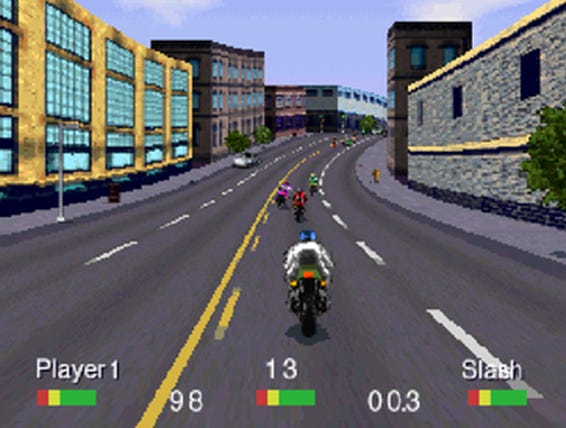
One’d think that era of simplicity is long gone given the gaming industry today in 2025 where the UX of the games have improved so drastically that one doesn’t just talk of a pretty rich gaming experience which seemed largely restricted to those plush arcades 2 decades back but also boasts of experiences that are almost life-like, when sometimes bordering surreal as well.
But then there are still some classic games like Sudoku or the classic Wordle that focus more on the game strategy itself, impeding players to find innovative ways to finish it & bag that win (although Microsoft Sudoku is an exception in this regard).
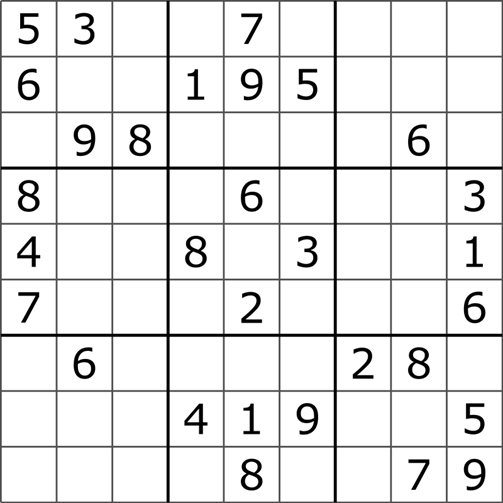
Notice what’s happening there. When some games seem totally inspired by a few real-life sporting events occurring across the world some others deal entirely with the mind. Although some may be led to believe that former ones are totally sophisticated & offer a rich gaming experience that’s just the part truth in reality.
Springing back to our subject of product management, is gaming experience entirely different from UX (user experience)?
Well, yes. UX is more generic when gaming experience is more specific to artifacts of the game.
The goal underlining the gaming (specifically those 3D games that are more lifelike) is to offer a pretty immersive & emotionally connectable experience relaying the real-life events making it as real & life-like as possible with miniscule deviations from the thematic that it is based upon.
When UX could be representative of a much wider perspective taking into account the other aspects that are entirely away from the thematic & the actual gaming experience like say, saving a game & reloading it or the ease with which you can choose the characters / players / avatars & keep track of multiple elements over a multi-player mode. Gaming experience is very specific when the UX is more generic & also multivariate in nature.
In case you are still having some trouble with its perception you could think of UX as some specific element of a product that evokes a sense of satisfaction from the users for a start, slowly moving stage-wise towards getting them to fall in love with it & then getting them hooked gradually, leading to a sense of accomplishment over every single session of usage transforming into a degree of loyalty.
⚠️WARNING: Beware, if you ever notice anyone taking sides & arguing over of them (UX - is it ART / SCIENCE?) it simply means that they are giving more impetus to that facet which could be the result of the nature of their job roles or their experiences thus far. When there’s still nothing wrong with that grossly, it’s always down to how you could get users hooked to the product in whole / a feature in part.
The multivariate nature stems from the perceptions themselves. The way a product person looks at UX could differ from the perception of someone who is contributing on the tactical side of things like say a designer.
There are 3 levels that one could look at UX broadly from.
1. STRATEGIC LEVEL
The strategic level although indirect could play a crucial role in defining the UX. How any given strategy goes on to influence those elements / variables that would then define the UX could prove to be seminal for any product’s success.
You start off by looking at the problem statement itself - that crisp definition of the problem as pertaining to a given customer segment & then branch into something more detailed like say conceptual design – the strategic process focused on the high-level design of a given product.
And this could be further broken down into 2 parts:
1.1 The PROBLEM:
At a high-level in defining the overall strategy & setting the product off on the right direction, the problem statement is what makes all the difference. Picking out the right problems to solve, defining them in a pretty crisp manner acts as the cornerstone & goes on to define a product’s success.
Look at the manner in which problem statements are defined & it shouldn’t take any experienced personnel to tie that down to how it would make a difference to the users & what kind of experiences ought to define the solution as well.
1.2 The SOLUTION:
Trickling down to the solutioning portions there are ample ways to solve a problem. It is a proven fact that time teams take to choose a solution is always higher than them coming up with the alternatives. Really, there’s solution bias to factor in & brainstorm over which one of the alternatives could prove to be the best amongst the lot. Also, what ought to matter is NOT what the team members think (although that’s where most would start off) but it ought to be down to user perception.
And there are many ways & means of getting there. Look around & you are sure to find tons of methodologies / process / frameworks that some seem to swear by as the gospel truth. Be it design thinking that enforces & cements a structured approach towards stitching a camaraderie enabling seamless collaboration or the conceptual design that lays out the ground rules for further tactical solutioning, it all boils down to offering the best UX to the users.
2. TACTICAL LEVEL
An extension of the strategic phase is the manner in which the intricacies of the solution gets defined & that is working towards the tactical side of things. There are multiple ways to solve problems & also multiple ways to design those experiences.
Look at any given product & you’d see how there is an element that makes it look elegant whilst also making it absolutely easy to use / operate. They both ought to function in tandem because if it happens to be just either one of them at best, that would still be effort getting wasted.
2.1 The ART:
The way a product looks undeniably has an emotional connect with the users & is an imperative piece of the UX pie & that could be summed up as the Visual design, the top-most layer of the design pyramid.
When one talks about design the common perception immediately points towards the look & feel, all those UI elements & the way they are organized, the color quotient used, those landing pages & the engagement quotient of the content displayed there. Each one of those artistic elements (& a whole lot of them beyond the scope of this write-up) carry a certain degree of importance, ignoring which could compromise the experience.
2.2 The SCIENCE:
But what’s also imperative is how the solution is built, its dynamism, its robustness, how light-weight the whole solution design is makes a huge difference in the UX & intern plays its part in defining the adoption levels of the product. There was a time when users patiently waited for 30-odd seconds for the changes to occur on screen as a result of their (clicking) action. Today one talks of information being available in abundance & at their fingertips all in a click & a jiffy.
For that to happen, there’s a lot of elements deeply rooted in science, engineering that comes to the foray. Talking of the aspect of robustness the visual element / art is what’s visible to the naked eye but there are layers underneath like say, interaction design, architectural design elements, database design that makes it all possible.
Products ought to tick 2 main boxes, it ought to solve a problem primarily & ought to lead to a sense of excitement every time the users get on to use it. And that’s the bottom line.
3. FUNCTIONAL LEVEL:
There are multiple teams that ought to come together, collaborate & find quick fixes to problems both major & minor if the products were to achieve even a diminutive margin of success. The trajectory of growth would depend on how those teams tend to function, what they do with the understanding of the Goal, the Final Outcome, the OKRs (Objectives & Key Results), how they chart out action plans towards inching to that goal step-wise.
Talking of these teams (aka Functions from the org’s standpoint) they could include every single one of them right from the ones framing the ground rules of the strategy (like say: Product Leadership) right up to the ones who are paying heed to those minor problems of the users (like say: Customer Success), proactively working towards weeding them out so that users could derive more value. Not to forget, the constant effort to keep a sharp lookout for feedback, analyzing it & factoring it into the process towards adding more value to the users.
3.1 The BoFu:
Post-sales, the journey between the decision to BUY & the VALUE REALIZATION may not really be as smooth as one perceives it to be, in fact it could be fraught with multiple problems across the funnel. Also, the fact that not all users are at the same level of expertise ought to be etched in the backs of the CS teams, solutioning teams & also the ones who are into servicing the clients / users full-time. Such BoFu (Bottom of the Funnel) blockers are a big NO-NO when one is prioritizing the UX.
What’s essential when solving for a blocker is quick action (aka quick-fix) that can immediately act upon & remove that friction point smoothening out the path towards helping users realize value. But, the importance of long-term value addition shouldn’t be overlooked in any sense of the word. Regressively digging into those issues towards unearthing more details, friction points, blockers, factoring that know-how into formulating crispier problem statements & lining that research up for the product teams to work out more solutions ought to be cyclical & ideally a never-ending quest to keep getting better.
3.2 The ToFu:
An existential crisis for a product organization is always going to be a deal-breaker. As an org. if one isn’t sure of how the users perceive them & their products that ought to point to a huge blocker internally, identifying which & nipping it in the bud is top draw. Educating the users about the UX & what they could expect with the product is quintessential.
I am sure you have heard of the phrase “Show them, don’t tell them”. When a picture they say is worth 1,000 words, what is a video worth? The extrapolation ought to be straightforward. Using those video walkthroughs, conducting seminars from time to time towards showing the users the best ways they can derive value out of the product is imperative given where the world stands today & the ease with which your product blends technology towards disrupting their workflow ought to be absolutely clear.