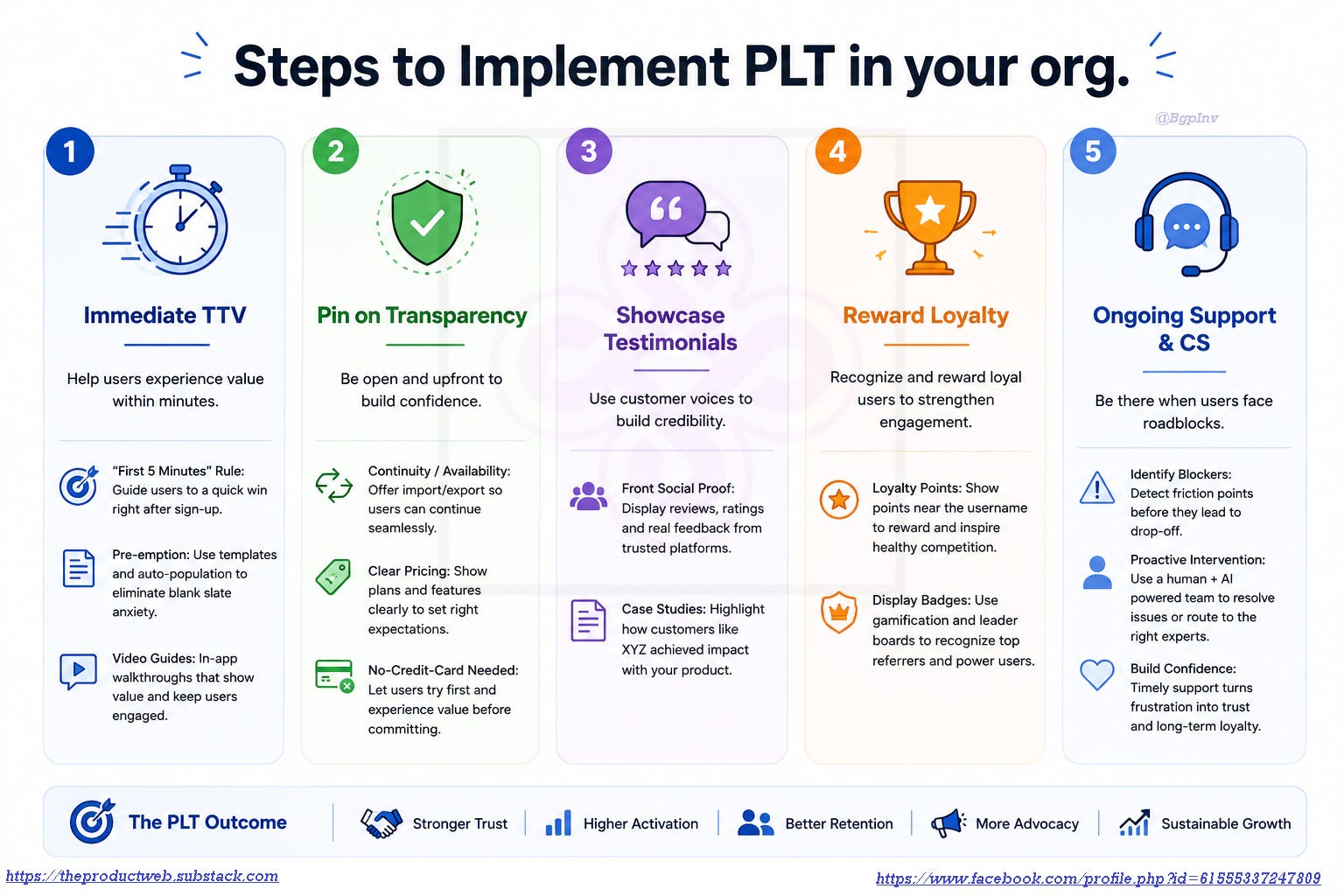
5 Steps to put PLT into practice
If you are operating with PLG as your primary growth model, here’s why investing in PLT would make a whole world of a difference…

Most of us have dined at countless restaurants over the years, but very few have ever stepped beyond the dining area and into the kitchen. In fact, if given the opportunity, many may probably decline that as well. And perhaps for good reason too.
The magic that customers experience at the front end is often supported by a backend that can be surprisingly chaotic. Kitchens can be messy, storage areas cluttered, processes inconsistent & operational discipline far from perfect. The customer, however, rarely sees any of it. They only experience the final outcome - the meal that arrives neatly plated at their table.
What’s fascinating is that some businesses are confident enough to pull back the curtain entirely. They invite customers behind the scenes to observe how the operation really works right from ingredient sourcing & inventory management to food preparation, quality checks, & ultimately, service delivery.
One notable example is the McDonald’s Kitchen Tour, where visitors are taken through the entire operational journey of the restaurant. Rather than hiding their processes, they showcase them. The experience offers a rare glimpse into the machinery behind the customer experience, demonstrating how a seemingly simple meal is the result of hundreds of interconnected decisions, systems & processes working in harmony. As we’ll see, there’s an important lesson here that extends far beyond restaurants.

As part of its global “Open Doors“ initiative launched in 2009, McDonald’s has been inviting customers behind the counter to see first-hand how their food is sourced, stored, prepared & served. Visitors could tour storage facilities, grilling stations, fry counters & even observe the company’s “Made For You“ process which is a system designed to begin food preparation only after an order is placed, eliminating the need for pre-cooking.
The message was remarkably simple: “We have nothing to hide.”
Fresh ingredients
Well-defined processes
Consistent quality standards
Minimal direct human handling
From order placement to food delivery, every step is intentionally laid out transparent.
But don’t you think this raises an interesting question…
What is the need for a global brand with millions of loyal customers worldwide to voluntarily expose its backend operations to public scrutiny?
→ The answer lies in one word: “TRUST”!!
Opening the doors to customers is far more than a marketing exercise for McDonald’s. It is a tangible demonstration of confidence in the systems, processes & standards that power the business. Rather than asking customers to trust the brand’s claims, such an act allows them to literally verify those claims for themselves.
And that changes everything. Once customers witness the operation first-hand, uncertainty begins to disappear. They no longer rely solely on advertisements, packaging, or brand messaging to form an opinion. Instead, they draw confidence from their own observations. The result is a deeper, more durable form of trust - one built on transparency rather than persuasion.
This principle extends well beyond the restaurant industry. It’s the same reason many premium restaurants operate open kitchens, allowing diners to watch chefs prepare their meals in real time.
“When visibility garners confidence & transparency seamlessly reduces skepticism”
The broader lesson for product leaders is equally powerful.
One of the most effective ways to build trust is through the product itself - a concept often referred to as Product-Led Trust (PLT). Modern buyers place significantly more faith in first-hand experiences than in marketing narratives. When a product transparently demonstrates its value, quality, reliability & operational integrity, it naturally reduces friction in the buying journey. Trust, in that sense, becomes a product feature. And products that make trust visible often find that conversion becomes easier, adoption accelerates & sales cycles shorten, not because customers were convinced, but because they no longer have reasons to doubt.
Putting PLT into Practice
If trust is a product feature, then building it cannot be left to marketing alone. It needs to be intentionally designed into the user experience.
Here are five practical ways to embed Product-Led Trust (PLT) into your product strategy.
Step 1: Deliver Immediate TTV
Trust begins when users experience the value for themselves.
For years, product teams have focused on reducing Time-to-Value. Today, reducing it isn’t enough. In an increasingly crowded market, the goal should be immediate Time-to-Value. Users have more alternatives than ever before & far less patience to explore them. This makes onboarding one of the most critical experiences in your product.
Every workflow, onboarding funnel & first-use experience should be engineered to answer a single question as quickly as possible - Why should I continue using this product?
The faster users experience a meaningful outcome, the faster trust begins to form.
Step 2: Lead with Transparency
Nothing erodes trust faster than hidden conditions.
Complicated pricing structures, surprise paywalls, mandatory credit card requirements & convoluted cancellation policies create friction long before users experience value.
Instead, allow users to evaluate your product on its merits. Offer meaningful free trials, showcase high-value capabilities early & create opportunities for users to achieve quick wins within their first few minutes of engagement.
The objective isn’t simply to let users try the product, it’s to allow them to independently validate promises you’re making.
Trust grows when customers discover that the product performs exactly as advertised.
Step 3: Amplify Customer Proof
Regardless of how markets evolve, one signal continues to outperform almost every other trust-building mechanism: customer validation.
Prospective users are naturally skeptical of product claims. But they’re far less skeptical of people who have already solved similar problems using the product. This is where customer testimonials, case studies, reviews & the insights gained via feedback become invaluable. The most compelling examples aren’t generic success stories but highly contextual narratives that help prospects see themselves in similar situations.
Even better, surface these trust signals directly within the product journey. Display relevant reviews, customer outcomes, or success stories near critical decision points & CTAs where users are evaluating whether / not to move forward.
A well-placed customer story carries more persuasive power than pages of feature descriptions or performance metrics.
Step 4: Rewarding & Advocating Loyalty
Loyalty is rarely a one-way relationship.
While organizations often expect loyalty from customers, the strongest brands demonstrate loyalty first by consistently delivering on their promises & rewarding continued engagement.
Recognition programs, referral incentives, milestone rewards, usage streaks, community status levels & exclusive benefits can all reinforce positive behavior while strengthening customer affinity. The impact becomes even greater when these rewards are made publicly visible. Profile badges, achievement levels, community rankings or status indicators create a transparent signal that engagement & contribution are valued.
Beyond rewarding existing users, they also create aspirational pathways for prospective users by clearly demonstrating that meaningful participation is recognized & celebrated.
Step 5: Proactively Invest in Customer Success
Product-led growth does not eliminate the need for customer support. If anything, it changes its role. The most successful PLG organizations understand that support is not merely a cost center, it is a trust-building mechanism.
Modern AI systems & agentic workflows can automate a significant portion of customer interactions, enabling lean support teams to operate at scale. However, automation should enhance the customer experience, not replace human accountability altogether.
Most users still live by the understanding that any help major / minor is just around whenever they need it.
Whether through AI-powered assistance, self-service resources, community forums, or a dedicated customer success team, the goal remains the same: reduce uncertainty & increase confidence.
Because ultimately, trust isn’t built through a single interaction. It’s reinforced through every touchpoint a customer has with your product long after the initial onboarding experience.
Case Study: Applying Product-Led Trust in an SMB SaaS Business
Product-Led Trust is not a standalone initiative, a marketing campaign, or a growth hack. It is the cumulative outcome of consistently delivering value, operating transparently, amplifying customer voices, rewarding loyalty & supporting users throughout their journey. When done well, trust stops being something you ask customers for, it becomes something your product earns.
Consider a SaaS company serving Small Medium Businesses (SMBs).
While SMB buyers share certain characteristics with traditional B2B customers, their buying behavior often resembles that of consumers more than large enterprises. They operate with lean teams, tighter budgets & limited time. Lengthy evaluation cycles, extensive onboarding efforts & delayed value realization can quickly turn even a promising solution into a perceived risk.
As a result, TRUST becomes a decisive factor in the adoption journey.
Most SMB customers aren’t merely asking, “Does this product work?”.
They are asking, “Can this product solve my problem today without creating additional workload or overheads for me?”
This is where PLT can become a meaningful competitive advantage. Let’s look at how an SMB-focused SaaS product can operationalize PLT across the customer journey with the very 5 steps mentioned above…
Step 1: Deliver Immediate TTV
For SMB customers, the first few minutes often determine whether they continue evaluating the product or abandon it altogether.
1.1 The “First Five Minutes” Principle
The onboarding experience should guide users toward a meaningful outcome as quickly as possible. Rather than asking customers to navigate lengthy setup processes, focus on helping them achieve an immediate win.
Examples include:
Generating their first report
Creating their first invoice
Sending their first campaign
Automating their first workflow
The faster users experience value, the faster trust begins to form.
1.2 Eliminate Blank-Slate Anxiety
One of the most common reasons for early drop-off is uncertainty around where to begin.
Pre-built templates, sample projects, default configurations & intelligent data pre-population can dramatically reduce this friction. Instead of presenting users with an empty workspace, present them with a working solution that can be customized as needed.
1.3 Guide Users Contextually
Modern users expect guidance within the product itself.
Interactive walkthroughs, contextual tooltips, onboarding checklists & embedded video tutorials help users discover value without forcing them to leave the application or navigate extensive documentation.
The best onboarding experiences don’t teach users how the product works. They help users accomplish what they came to do.
Step 2: Lead with Transparency
Trust thrives when uncertainty is minimized.
2.1 Provide Data Portability
Customers should feel confident that their data belongs to them.
Simple import & export capabilities signal that the business is prioritizing customer success over customer lock-in. Ironically, the easier it is for customers to leave, the more likely they are to stay.
2.2 Make Pricing Predictable
Few things erode trust faster than unclear pricing.
Clearly communicate what each plan includes, what limitations exist & what customers can expect as they scale. Transparent pricing reduces decision friction & prevents unpleasant surprises later in the relationship.
2.3 Remove Commitment Anxiety
Requiring credit card information before users experience value can create unnecessary resistance.
Allowing prospects to explore the product without an upfront financial commitment communicates confidence in the offering. It screams out a simple yet powerful message loudly: “Experience the value first. Pay only when you are convinced.”
Step 3: Amplify Customer Proof
People trust people. For SMB buyers, customer validation often carries more weight than feature lists, benchmark reports or marketing claims.
3.1 Surface Social Proof Early
Reviews, ratings, customer quotes & success metrics should be woven throughout the product experience, not hidden away on a separate testimonials page.
The closer social proof is placed to a conversion decision, the more influential it becomes.
3.2 Showcase Contextual Success Stories
Generic testimonials are useful but specific testimonials are powerful.
A statement like, “Company XYZ reduced invoice processing time by 60% using this workflow.” helps prospects visualize similar outcomes within their own businesses.
Best case studies don’t simply celebrate customer success, they help future customers imagine their own.
Step 4: Rewarding & Advocating Loyalty
Trust deepens when customers feel recognized.
4.1 Create Visible Recognition Systems
Loyalty programs, referral incentives, usage milestones & customer achievements can all strengthen engagement while reinforcing positive product behavior.
Visible indicators such as profile badges, achievement levels, customer tiers or referral rankings make recognition tangible.
4.2 Turn Success into Social Currency
When customers are publicly acknowledged for their contributions, referrals, expertise or engagement, they become advocates rather than merely users.
The effect extends beyond the individual being recognized. It signals to the broader community that meaningful participation is valued & rewarded.
Done well, loyalty programs become trust accelerators.
Step 5: Invest in Proactive Customer Success
Even the most intuitive products encounter edge cases, blockers & moments of user confusion. The difference between retention & churn often comes down to how quickly those moments are resolved.
5.1 Identify Friction Before Customers Leave
Modern analytics & AI-powered support systems can detect stalled onboarding flows, incomplete setup journeys, declining usage patterns & unresolved issues long before customers decide to churn.
The opportunity lies in intervening early.
5.2 Combine Automation with Human Expertise
AI agents can handle a significant portion of support interactions, but there are moments where human intervention remains invaluable.
Whether it’s resolving a complex issue, clarifying a workflow or helping a customer achieve a desired outcome, responsive customer success teams reinforce confidence in the product & the company behind it.
“Customers don’t expect perfection. They expect partnership.”
And knowing that someone is available when things go wrong often becomes a trust signal in itself.
Conclusion:
Product-Led Trust is not merely a growth strategy—it’s a risk-reduction strategy. When customers experience value quickly, understand exactly what they’re signing up for, see proof from similar businesses, receive recognition for engagement & know support is readily available, trust becomes a natural outcome. When trust becomes a natural outcome, adoption, retention, expansion & advocacy tend to follow.
Just remember these steps: